
Ecommerce Website Development in Pakistan: Stores Built for Local Buyers
Webtors provides ecommerce website development in Pakistan for retailers and brands that want a store built around how people here actually buy. From our office in Karachi, we build Shopify, WooCommerce and custom stores with cash on delivery, local payments, courier connections and a checkout that works smoothly on any phone.
- 1,100+ Websites and projects delivered
- 990+ Clients served
- 35+ Countries served
- 4.9★ Google rating from 206 reviews
Why ecommerce website development in Pakistan needs its own approach
A store template built for Europe or the US assumes customers pay by card and trust a website they have never heard of. Pakistan is different. Many buyers still prefer cash on delivery, ask questions on WhatsApp first, and browse on a phone over mobile data.
Good ecommerce website development in Pakistan starts from those facts. The store has to load quickly, build trust fast, make delivery charges obvious, and give your team a simple way to confirm orders and book couriers. Get these right and the same marketing budget brings in more sales.
Ecommerce website development in Pakistan: Shopify, WooCommerce or custom
This is the first big decision, and it affects your costs for years. We build on all three, so we recommend what suits your store:
| Shopify | WooCommerce | Custom | |
|---|---|---|---|
| Best for | Brands that want low upkeep | Stores needing flexibility, or already on WordPress | Unusual workflows such as B2B pricing or marketplaces |
| Upfront cost | Lower to medium | Lower to medium | Highest |
| Ongoing cost | Monthly plan and apps, in dollars | Hosting and paid extensions | Hosting and developer time |
| Technical upkeep | Low | Medium: updates, backups, security | High |
| Local gateways | Depends on the gateway | Usually more options | Anything with an API |
Read more about Shopify store development in Pakistan, including how payments work. For general store requirements, the WooCommerce documentation is a useful reference too.
Ecommerce website development in Pakistan: payments, COD and couriers
Cash on delivery
COD remains essential for many Pakistani stores, but it brings refused parcels and return charges. We set up order confirmation by WhatsApp or call, clear delivery charges, and the option to reward customers who pay in advance.
Payment gateways
We integrate cards and wallets such as JazzCash and EasyPaisa where your platform and merchant account allow it. Each gateway has its own approval process and needs business documents, so we recommend starting that process early. We test each one with real transactions before launch.
Couriers
We connect couriers such as TCS and Leopards where a suitable app or API exists, so staff can book parcels from the store and customers get tracking numbers. The less re-typing your team does, the fewer wrong addresses you get.
Bank transfer
Still common for higher-value orders. We add clear instructions and a simple way to send a payment screenshot, so orders don’t stall.
Features every ecommerce website in Pakistan needs
- Fast mobile pages: most of your buyers are on phones, often on mobile data, so we design for them first.
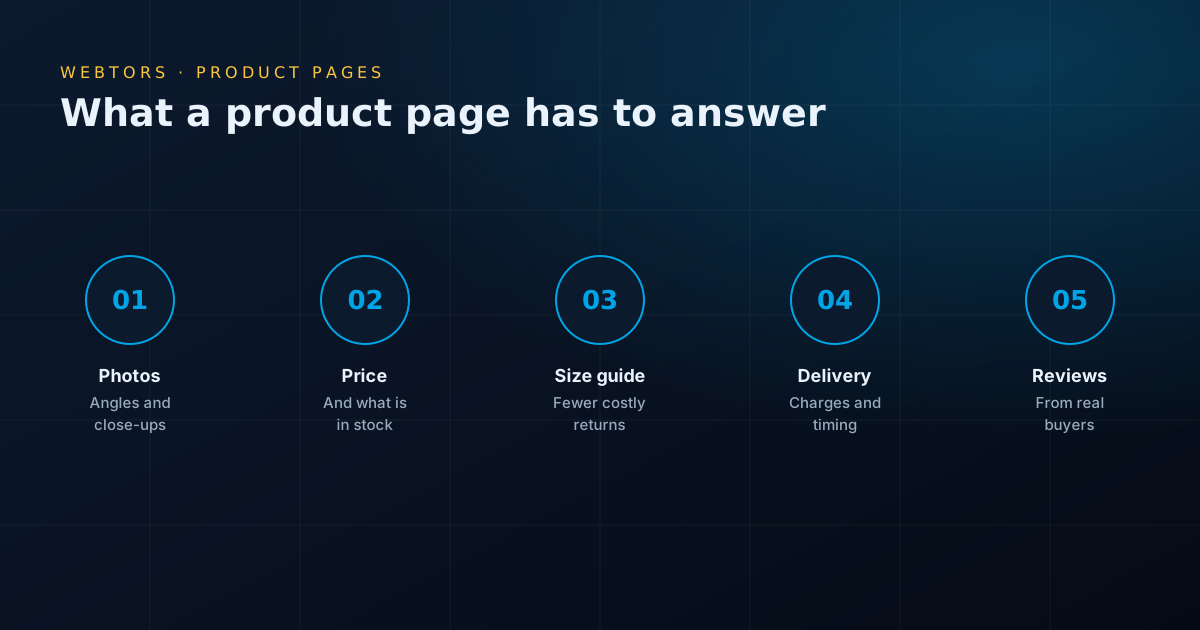
- Clear product pages: several photos, size guide, price, stock status, delivery time and return policy.
- Useful search and filters: by size, colour, price or brand, depending on your products.
- Simple checkout: few fields, guest checkout, and no surprise charges at the last step.
- Trust signals: real reviews, your address, a visible WhatsApp number, and clear policies.
- Order management: a simple admin for orders, stock, discounts and customers.
- Abandoned cart reminders: a way to win back people who nearly bought.
- Tracking: Google Analytics e-commerce events and the Meta pixel, so you know what sells.
- SEO structure: clean category URLs, product schema and unique descriptions, following Google’s e-commerce guidance.
Ecommerce website development in Pakistan: what it costs
Prices vary widely because stores vary widely. A small catalogue on a ready theme costs far less than a custom system with thousands of products. These are the factors that move the price most:
- Platform: Shopify, WooCommerce or custom development.
- Design: a customised theme or a fully custom design.
- Products: how many, how many variants, and who uploads them.
- Integrations: gateways, couriers, stock systems and accounting software.
- Content: product photos and descriptions, if you need them created.
Plan for yearly and monthly running costs too: platform or hosting, domain, paid apps or extensions, gateway fees and marketing. See our e-commerce website price. Our fixed quote lists all of this, so you can compare options fairly.
Our process for ecommerce website development in Pakistan
- Consultation: we learn your products, volumes, margins and how you handle orders today.
- Plan: we recommend a platform, plan your categories and agree a fixed quote and timeline.
- Design: you approve the home, category, product and checkout designs on mobile and desktop.
- Build: we develop the store and upload your products.
- Integrate: payments, couriers, analytics and email are connected.
- Test: we place real test orders with each payment method and try the store on real phones.
- Launch and train: we go live, watch the first orders closely and train your team.
Getting ready to sell online: a checklist
You don’t need everything on day one, but having these ready makes the project faster:
- Product list with names, prices, sizes, colours and stock.
- Good photos of each product. If you need them, ask about product photography.
- Delivery charges and areas, and which courier you use.
- Your return and exchange policy.
- Business documents and a bank account for gateway applications.
- Your domain name, logo and brand colours.
- A person who will confirm orders and reply to messages.
Common reasons online stores fail to sell
- No traffic plan: a new store gets few visitors on its own. Budget for marketing from the start.
- Slow pages: heavy images and too many plugins lose buyers on mobile data.
- Poor photos: customers can’t touch the product, so photos carry the sale.
- Unclear delivery: no charges or timing shown until checkout.
- Too many fields at checkout: each extra one loses some customers.
- Slow replies: a buyer asking on WhatsApp may buy elsewhere if nobody answers.
- No reason to trust you: no reviews, address or real photos.
After launch: growing your store
The first few weeks show what needs fixing. We review analytics, watch where buyers drop off, and adjust. To bring in customers, our digital marketing team runs Meta ads for sales and retargeting, and our SEO services build search traffic for your categories and products over time.
Why choose Webtors for ecommerce website development in Pakistan
- Experience across industries: fashion, jewellery, leather, cosmetics, books, home products and more.
- Platform-neutral advice: we build on Shopify, WooCommerce and custom code.
- In-house team in Karachi: design, development and marketing in one place.
- Since 2014: over 1,100 websites and projects for more than 990 clients.
- Rated 4.9 on Google: from 206 reviews by real clients.
Your own ecommerce website or a marketplace?
Many sellers in Pakistan start on Daraz, Instagram or Facebook. These are useful ways to test demand, but they each have limits. The two approaches work well together:
| Marketplace or social selling | Your own ecommerce website | |
|---|---|---|
| Getting started | Quick and cheap | Takes planning and investment |
| Customers | The platform brings some buyers to you | You bring your own, through ads and SEO |
| Customer data | Limited, and it often stays with the platform | Yours, for repeat sales and retargeting |
| Brand | Your products sit next to competitors | Your store, your look, your rules |
| Costs | Commissions or fees on sales | Build cost, running costs and marketing |
A common path is to prove a product on a marketplace, then move to an ecommerce website in Pakistan once repeat customers and margins justify it, while keeping both channels open.
Ecommerce website development in Pakistan for mobile checkout
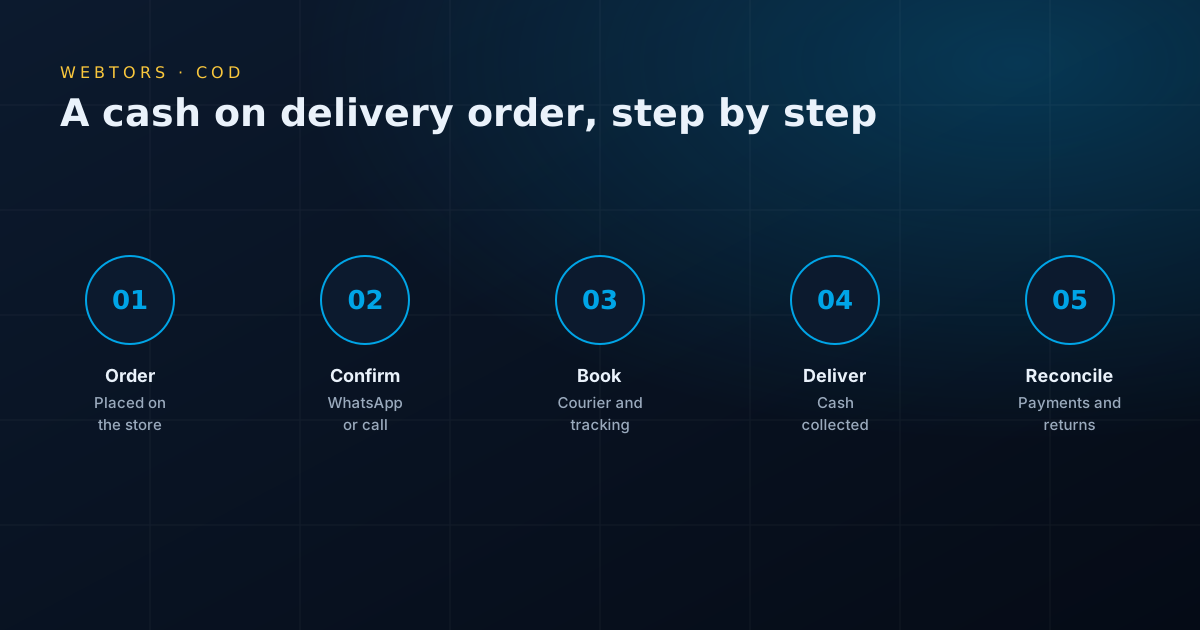
Checkout is where stores quietly lose money. Small details have a big effect, especially on a phone:
- Guest checkout: don’t force account creation before someone can buy.
- Right keyboard: show a number pad for phone numbers.
- Fewer fields: ask only for what your courier needs.
- Local address format: Pakistani addresses don’t always fit foreign templates, so a city list and a clear address box work better than strict fields.
- No surprises: show delivery charges before the final step.
- Visible help: a WhatsApp link at checkout can save a sale.
- Order confirmation: send it right away, by SMS, WhatsApp or email, so buyers know it worked.
Organising products on an ecommerce website in Pakistan
Good structure helps shoppers find products and helps Google understand your store. Plan this before anything is uploaded, because it is painful to change later:
- Use the words buyers use: “lawn suits” rather than an internal range name.
- Keep the structure shallow: people should reach any product in a few taps.
- Use filters for attributes: size, colour and price belong in filters, not in dozens of separate categories.
- Keep product data consistent: the same fields filled in the same way make filters and bulk updates work.
- Plan for out-of-stock items: decide whether to hide them, mark them, or suggest alternatives.
SEO after ecommerce website development in Pakistan
Search can become your cheapest source of sales, but stores have their own SEO problems. The ones we fix most often are:
- Duplicate descriptions: text copied from suppliers appears on many other sites.
- Thin category pages: a grid of products with no text gives Google little to work with.
- Filter URLs: filters can create thousands of near-identical pages unless handled properly.
- Deleted products: old pages should redirect to something useful instead of returning errors.
- Missing product schema: this helps show price and stock details in search results.
- Slow images: large unoptimised photos are the most common speed problem on store pages.
Security and customer trust
People are handing you their address and phone number, and sometimes payment details, so protect them:
- SSL on every page: this is standard, and browsers warn visitors when it’s missing.
- Let the gateway handle cards: a good setup keeps card details off your own server.
- Limit staff access: give each person only the permissions they need.
- Keep backups: on self-hosted stores, test that they can really be restored.
- Update regularly: WooCommerce and its extensions need routine updates.
- Follow the rules: publish clear privacy, returns and refund terms.
Returns, refused parcels and your profit
Many stores calculate profit from sales and forget returns. A refused COD parcel can cost you two courier charges and a damaged product, so the numbers need watching:
- Track refusal rates by city, product and traffic source. Some ads bring many orders but few real buyers.
- Confirm orders before dispatch, particularly for first-time buyers and high-value items.
- Make size and colour information clear, as wrong expectations cause many returns.
- Keep the returns process simple. A customer treated fairly often buys again.
The numbers to watch after launch
- Conversion rate: the share of visitors who order.
- Average order value: bundles and free-delivery thresholds can lift this.
- Cart abandonment: where do people give up, and why?
- Delivered sales: orders that were actually delivered and paid for, not just placed.
- Repeat purchase rate: returning customers don’t need another ad to find you.
When to redesign an ecommerce website in Pakistan
You may have outgrown your store if pages have become slow as your catalogue grew, if plugin conflicts are breaking things, if monthly app costs keep rising, or if staff spend hours on work the system should handle. A move needs care. Products, customers and orders need transferring, and old URLs need redirecting so you keep your rankings. We plan ecommerce website development in Pakistan and migration work so your store keeps trading while the new one is built.
Ecommerce website design that builds trust
First-time buyers are wary of unknown stores, particularly when they pay in advance. Good ecommerce website design answers the unspoken question: can I trust this shop? These details help most:
- A real address and phone number, visible in the footer and on the contact page.
- Your own photos, rather than images copied from a supplier or another store.
- Clear policies, written for your actual delivery and returns process.
- Real reviews, with names or photos where customers agree.
- An active social presence, linked from your site so people can check you’re real.
- Consistent branding, from your logo through to the parcel that arrives.
Wholesale and B2B stores
Selling to other businesses brings different requirements. You may need customer-specific prices, minimum order quantities, quote requests instead of a cart, credit terms, and large catalogues that buyers re-order from often. Some of this is possible on WooCommerce or Shopify with the right setup; heavier requirements may call for custom development. Tell us how you sell today and we will advise on the simplest setup that works.
Hiring an ecommerce website developer in Pakistan
Before you pick a team for ecommerce website development in Pakistan, ask to see stores they have built and place a test order up to the payment step. Then ask:
- Which payment gateways and couriers have you actually connected before?
- Who owns the store, domain, and hosting account?
- Will you upload my products, or do I do that?
- Which paid extensions or apps will I need, and what do they cost each year?
- Who handles updates and backups after launch?
- How will I track sales and marketing results?
Writing product content that sells
Shoppers can’t touch your products or ask a salesperson, so your words and photos have to do that work. Good product content on an ecommerce website in Pakistan is specific: exact measurements, fabric or material, what is in the box, care instructions and delivery time.
Write for the questions your team already answers on WhatsApp, because those are the doubts stopping people from buying. Avoid copying descriptions from suppliers, since the same text appears on many other stores and gives Google no reason to prefer yours. If your catalogue is large, start with your best sellers and your most profitable categories, then work outward. We can help you plan this as part of ecommerce website development in Pakistan, or write it for you.
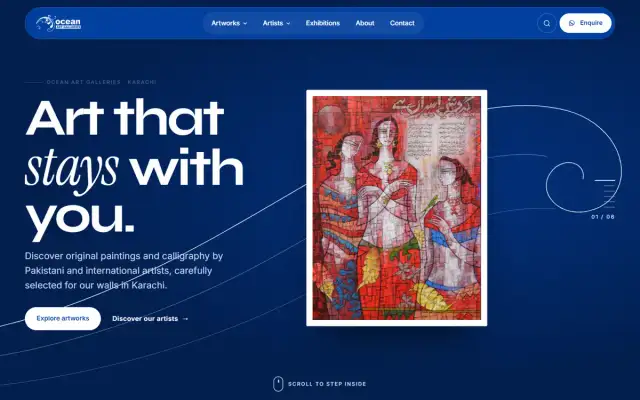
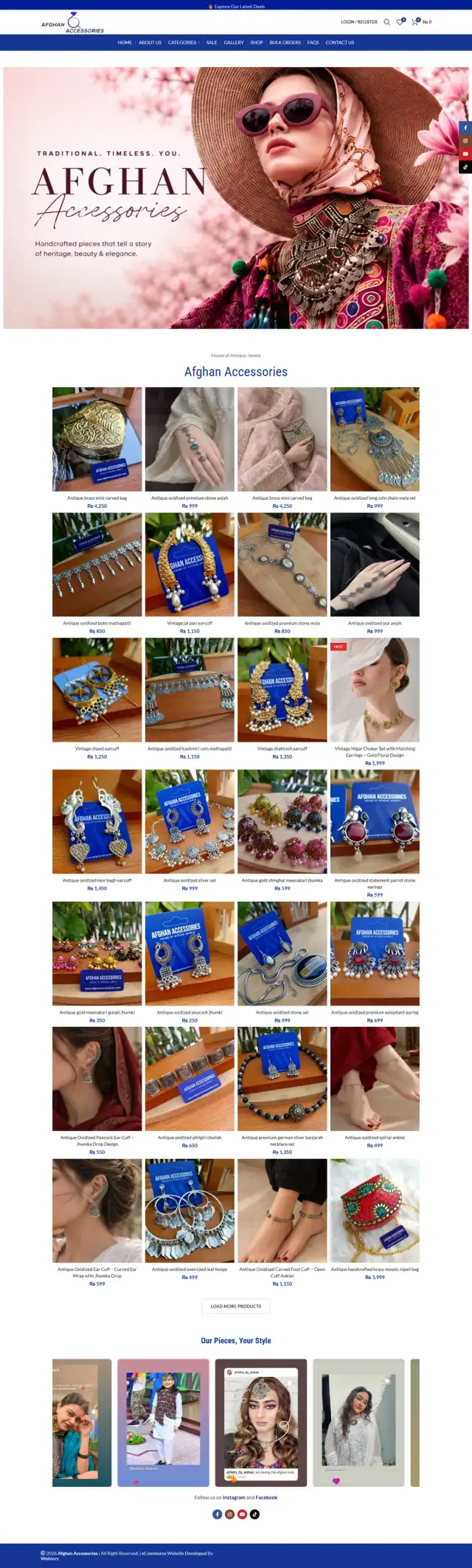
Online stores from our ecommerce website development team
Ecommerce website development in Pakistan: common questions
How much does an ecommerce website cost in Pakistan?
It depends on the platform, the design, the number of products and the integrations you need. A small store on a customised theme costs far less than a custom system. We send a fixed quote after a free consultation, including an estimate of running costs.
How does an ecommerce website in Pakistan handle cash on delivery?
COD can be set up on Shopify and WooCommerce. We also recommend confirming orders by WhatsApp or call before dispatch and showing delivery charges clearly, which helps reduce refused parcels.
Which platform is best for ecommerce website development in Pakistan?
Shopify suits owners who want little technical upkeep and accept a monthly fee. WooCommerce suits those who want more control and have someone to manage updates. We recommend one after hearing your product count, budget and who will run the store.
Can you add JazzCash, EasyPaisa or card payments?
Usually yes, depending on your platform and on merchant approval from the provider. We advise on the current options, help with the integration and test each method with real transactions.
Does ecommerce website development in Pakistan include courier links?
We connect couriers such as TCS and Leopards where a suitable app or API exists, so your team can book parcels from the store and customers receive tracking numbers.
How long does ecommerce website development in Pakistan take?
It depends on the number of products, the design and the integrations. Gateway approval is often the slowest part, so we suggest applying early. We agree the timeline in your quote.
Will I be able to manage products and orders myself?
Yes. We build a simple admin and train your team on products, orders, stock and discounts at launch. We also offer support if you need help later.
Start a project
Tell us what you want to build.
A new website, an online store, SEO or IT support — an expert will reply with honest advice and a clear quote. The first consultation is free.
- Phone / WhatsApp+92 334 3399900
- Emailsales@webtors.com
- OfficeMezzanine Floor M1, Plot #6C, Zamzama Commercial, Lane 2, Phase-V, DHA, Karachi, Pakistan